고정 헤더 영역
상세 컨텐츠
본문
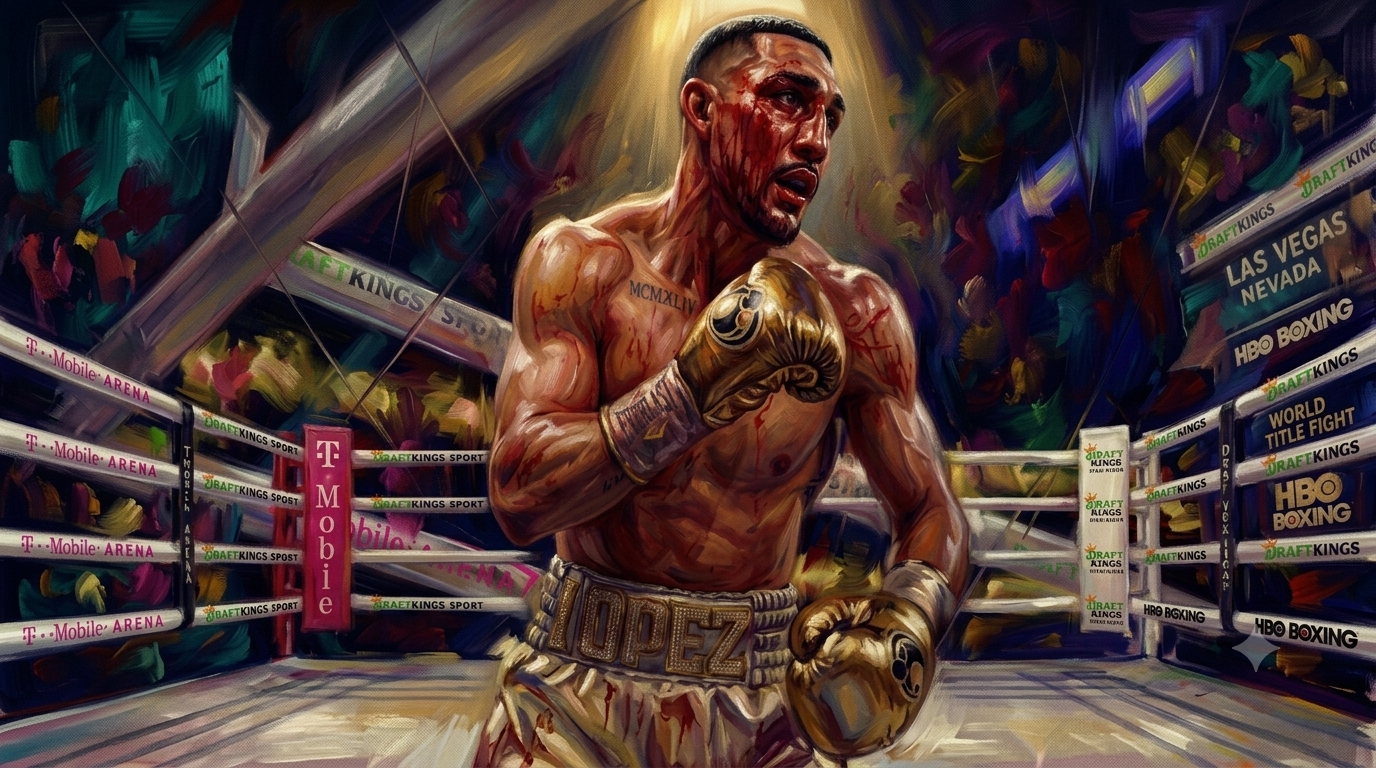
Teofimo Lopez becoming a three-division world champion by defeating Rolly Romero is no small feat. It's the kind of accomplishment that cements a fighter's legacy and puts him in rare company. But the way this win came about leaves plenty of room for debate, and it's worth digging into why.
The result itself tells the story of just how close this bout was. Lopez won by majority decision, with scorecards of 114-114, 115-113, and 116-112. One judge saw the fight as a dead-even draw. The other two gave Lopez the nod, but only by the slimmest of margins. This wasn't a clear-cut, dominant performance where everyone in the building knew who won before the final bell. It was a fight decided by inches, and that alone should make fans pause before crowning this as an unambiguous statement win.
For a fighter looking to prove he belongs at welterweight and is ready for undisputed status down the line, a split verdict like this doesn't exactly send the message he was hoping for. It suggests he's still finding his footing at the new weight class, even in victory.
Anyone who followed the fight round by round would have seen stretches where Romero looked like he was winning, not losing. At one stage, he landed a sharp jab and a hook that opened a cut over Lopez's eye, then followed it up with a heavy right hand that visibly hurt his opponent. That's not the kind of sequence you'd expect from a fighter who ends up on the losing side of a lopsided decision. It's the kind of sequence that makes you question how the cards could have been so close to even.
This matters because it complicates the narrative. If Lopez had walked through Romero from bell to bell, there would be little to argue about. Instead, Romero landed real, fight-altering shots, and still came up short on two of the three cards. That disconnect between what fans watched live and what the judges wrote down is exactly the kind of thing that fuels frustration with boxing's scoring system.
Step back from the round-by-round drama, though, and Lopez's résumé now looks genuinely impressive. This win comes off the back of a unanimous decision loss to Shakur Stevenson back in January, so from a career-trajectory standpoint, it's a strong bounce-back. More importantly, it makes him a champion in three separate weight divisions, a distinction only a handful of boxers ever reach.
That's an achievement that stands on its own, regardless of how many points separated him from Romero on fight night. Multi-division championships aren't handed out for style points; they go to fighters who can adapt across weight classes and keep winning against elite competition. Whatever happened on the cards, Lopez now has a resume that few active fighters can match, and it opens the door to the kind of career-defining fights he's clearly chasing, including a potential clash with the winner of Ryan Garcia and Conor Benn as he pushes toward undisputed status at welterweight.
For Romero, this is a tough pill to swallow, especially fighting in his adopted hometown of Las Vegas. He was making the first defense of a title he'd won in dramatic fashion by upsetting Ryan Garcia, and by most accounts he gave Lopez real problems for stretches of the fight. Losing a razor-thin decision, especially one where a judge had it dead even, is arguably worse for team Romero than losing clearly would have been. A clean loss is easier to accept and move past. A split, contentious one leaves both camps, and the fanbase, arguing for weeks about what should have happened.
Given how competitive the fight actually was, it wouldn't be surprising to hear calls for an immediate rematch. When scorecards are this tight and one fighter clearly had moments of visible success, the sport's history is full of examples where a rematch becomes the natural next step, both for the fans who want clarity and for the business of boxing, which thrives on unresolved rivalries.
My take is that the headline here shouldn't just be "Lopez wins, becomes three-division champ." The more important story is what this fight reveals, again, about how inconsistent and opaque professional boxing judging can be. When a bout is close enough that one judge scores it a flat draw while the other two swing meaningfully toward one fighter, it's a signal that something about how these fights are being scored deserves scrutiny.
This isn't a new problem in boxing. Fans have grown accustomed to shaking their heads at scorecards that don't match what they watched with their own eyes. But every time it happens in a high-profile fight like this one, it chips away a little more at the sport's credibility. Casual fans in particular, the ones boxing desperately needs to keep growing its audience, are the quickest to be turned off by decisions that feel arbitrary or inconsistent.
Teofimo Lopez is, by the official record, a three-division world champion and the new face at the top of the welterweight division. That's the reality going forward, and nothing about a contested scorecard changes what's written in the history books. But for anyone who watched the fight unfold, the lingering question isn't really about who deserved the win. It's about whether boxing can ever get its judging consistent enough that nights like this stop generating more controversy than celebration.
Until that changes, wins like Lopez's will keep carrying an asterisk in the minds of fans, not because the fighter didn't earn his shot at greatness, but because the system meant to confirm it keeps giving everyone reasons to doubt.


